
The Arctic Evidence Trail
Deception PointThis flow follows the successive clues that connect the discovery of the rock to its artificial insertion beneath the ice.
increasing Bearing strength in each event
 decreasing
Bearing strength in each eventdecreasingAn Object Beneath the Ice
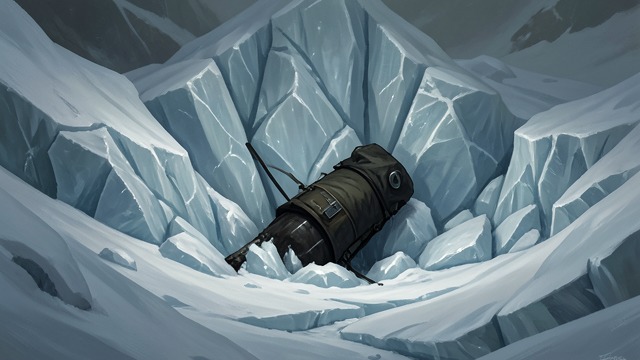
An Object Beneath the Ice
A density anomaly
PODS detects an unusually dense shape buried beneath the Milne Ice Shelf. NASA interprets it as a possible meteorite and sends a team to investigate.
The object’s location appears to offer a natural explanation for why the rock has remained untouched and preserved for centuries.
Context mistaken for proof
The claim of undisturbed ice becomes a central part of the authentication. If the surrounding layers are intact, scientists can treat the object’s burial as evidence of age and origin.
That conclusion depends on a hidden assumption: the rock arrived through natural processes rather than through the ice from below.
Cores and Ice Layers
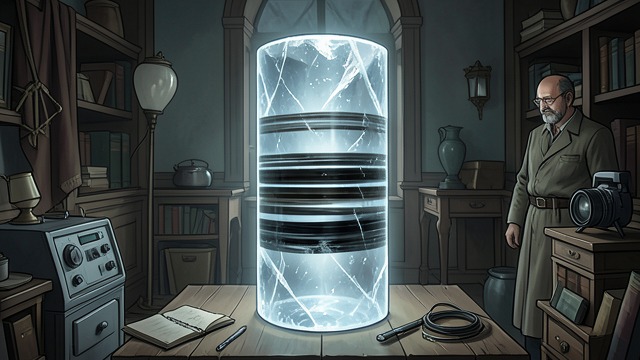
Cores and Ice Layers
A geologic calendar
Norah Mangor studies ice cores and counts annual layers to date the meteorite’s apparent arrival. The layers indicate that the object has been buried since 1716, matching a historical account of the Jungersol Fall.
Her readings seem to provide independent confirmation of NASA’s proposed impact date.
A persuasive match
The agreement between physical layers and historical description strengthens confidence in the claim. The scientists see no reason to suspect that the surrounding ice has been manipulated.
The later discovery of an insertion shaft reveals that the dates describe the ice around the planted rock, not a genuine meteorite landing.
Salt in Freshwater
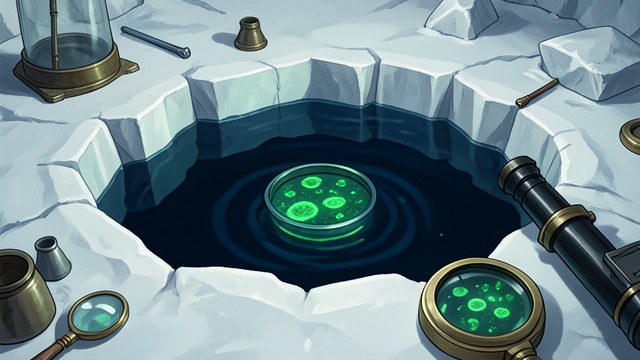
Salt in Freshwater
An impossible mixture
Tolland sees bioluminescent plankton in meltwater from the extraction shaft. The pool should be freshwater isolated within solid ice, while the organisms normally inhabit the ocean.
A salinity test confirms brine, and a microscope identifies marine plankton. The water’s composition contradicts the sealed-glacier premise.
A clue rather than a nuisance
The contradiction initially seems like a small technical complication beside the fossils. Rachel recognizes that even a minor flaw could undermine the larger scientific claim if the public learns NASA ignored it.
Her insistence on explaining the anomaly leads the team to obtain a more direct scan of the ice.
A Channel from Below
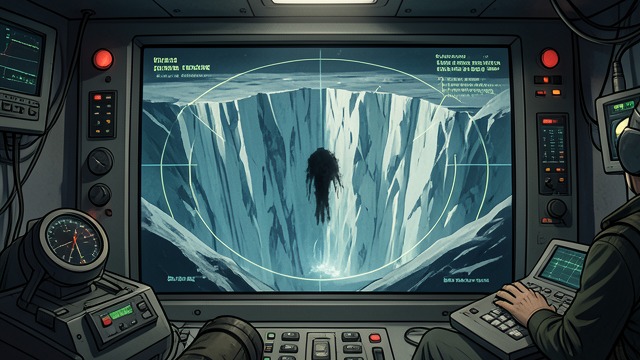
A Channel from Below
The radar finds a structure
Norah’s scan shows a broad column of sea ice beneath the extraction pit and a body in the shaft. The evidence indicates that an opening once connected the rock’s position with the ocean below.
The artificial passage explains how ocean organisms entered the area and how the rock could have been raised into place.
The chronology reverses
Rather than proving ancient arrival, the ice becomes evidence of a recent operation. The shaft’s refreezing concealed the route but did not erase it from radar.
The scientific team now has a physical record of the staging, though the people behind it remain unknown.
The Evidence Leaves the Ice
The Evidence Leaves the Ice
A chain of independent tests
The surviving investigators combine the radar image with marine fossil comparisons and microprobe results. The evidence shows that both the rock’s placement and its claimed origin have been misrepresented.
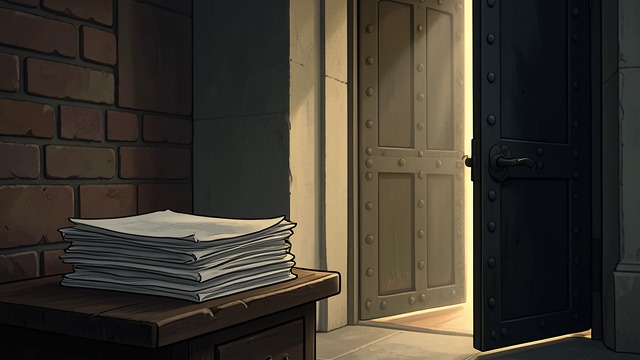
Rachel gathers the images and test data into a packet that can travel beyond the Arctic camp.
A fragile transfer
She faxes the evidence to her father’s office while communications are being jammed. The packet’s arrival depends on equipment and timing, but it changes the investigation from a private discovery into a potential public scandal.
The Arctic evidence trail is complete only when its data survive the people who tried to suppress it.
Before the official NASA expedition
The first day at the camp
After the extraction pit begins to glow
During Norah’s night survey
Near dawn aboard the Goya
